


Leaders hit moments when a project feels like a sinking ship. Water rushing in. Timelines tight. Pressure high.
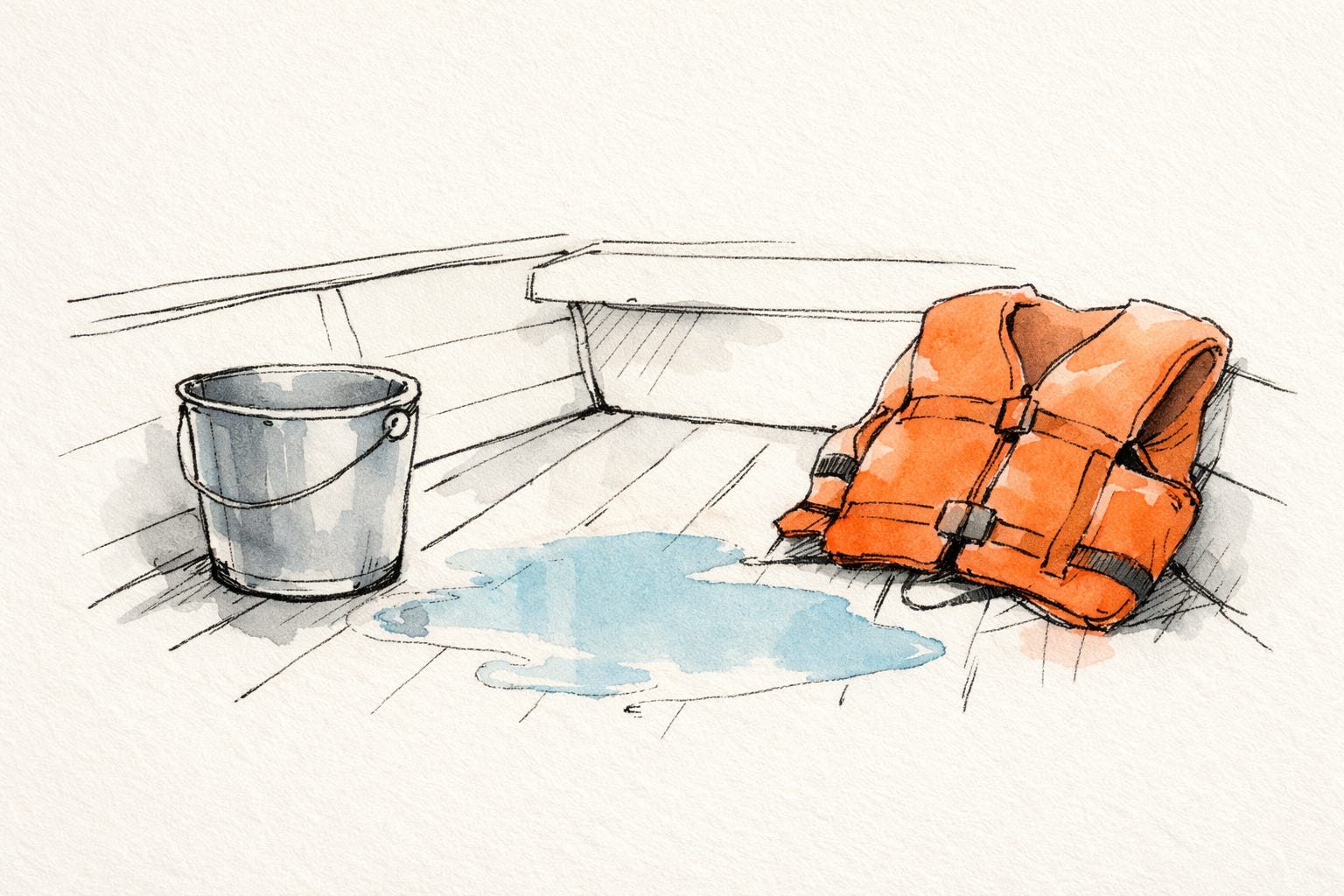
In those moments, there are two mindsets: buckets or lifejackets.
A bucket mindset says: We’re bailing water. This boat is staying afloat. The only question is how much effort it will take.
A lifejacket mindset says: How do I prepare for the exit? How do I spin this failure so it wasn’t so bad? What’s survival after this collapse going to look like?
Both have their place. There may come a time where lifejackets are necessary. But in the middle of the fight, when things are difficult, the team does not need exit strategies. They need more people grabbing buckets.
What you have to decide first
The buckets versus lifejackets question is not only about grit. It’s about mission.
Some work is conditional. You are doing a job. You are getting paid. You care, but you are not sold out. In that situation, you will reach for lifejackets quickly. Not because you are weak, but because you were never planning to go down with the ship.
There are only a few things worth giving your life and time to. If you are called to something hard, and you believe the mission is worth sacrifice, that changes how you show up when the water starts rising.
If you are not called to it, do not pretend. Do not ask your team for covenant-level commitment when you have not made that commitment yourself.
The decision rule
Here is the rule I’m trying to live by.
Set a timeline. Then commit to buckets inside it.
Until that point, act like buckets are the only option. Not because you are naive. Because the moment you start planning your explanation, you stop doing the work that might save the thing. You shift from building to managing perception. That shift costs you more than you think.
Lifejackets are for later. Buckets are for now.
And there is a practical reason this works. Teams take their emotional cues from the leader. If you are already halfway out the door, they will be too.
If you keep finding yourself wanting a lifejacket early, over and over, it might not be the project. It might be the job. It might be the mission. It might be that you are not sold out for what you are building.
A story from the trenches
I recently had to fill a large number of seats for several donor dinners we held as an organization.
For weeks, the RSVP list was bleak. Emails went unanswered. Dates did not work. Momentum stalled. I felt hopeless.
Luckily, even though I felt discouraged, I had made a decision. I was not going to evaluate whether it was time to jump ship until five days before the event. Until then, it was all hands on deck. We were in bucket mode.
No mental energy wasted on spin, excuses, or backup plans. All focus went toward bailing water. Who else can we invite? What options have we not tried yet?
That pressure pushed me to do something I rarely do. Cold outreach on LinkedIn. I messaged people I barely knew, many of whom I assumed would have no interest.
To my surprise, the response rate was far higher than I expected. What began as donor dinners turned into something even better. Introduction dinners with brand new potential partners.
If I had shifted into lifejacket mode too early, that win would have been lost.
The danger of lifejacket thinking
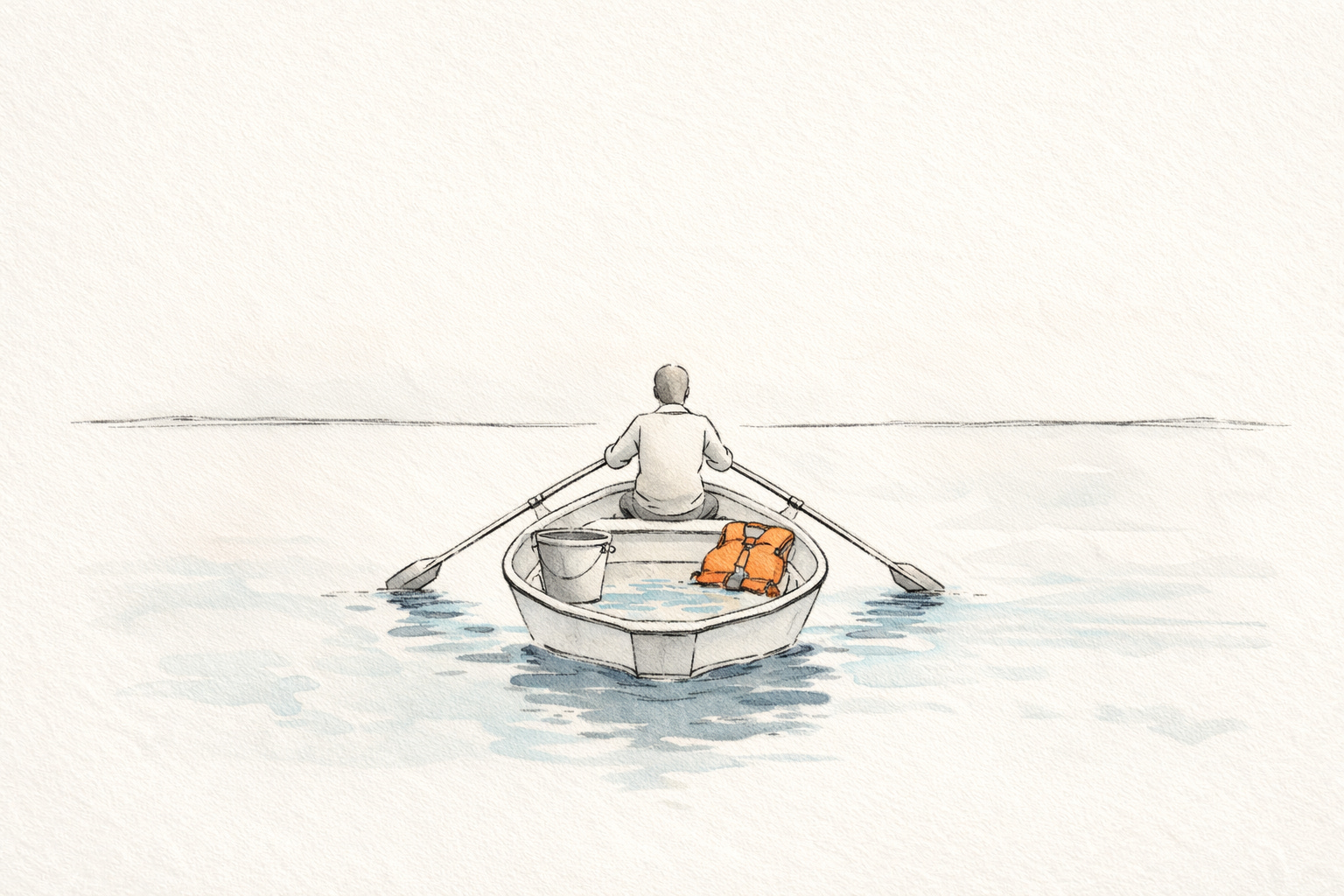
When waves are crashing, lifejackets can feel like the responsible move. But too often, they become a distraction.
A salvageable project gets called off, and all its potential dies early. Not because it could not be saved, but because the leader abandoned hope. They started preparing the story instead of staying in the work.
I bet if you ask great founders and entrepreneurs, each one has a bucket moment. A season where the thing should not have worked, and the only reason it did was because they stayed in it. Had they kept their lifejackets on, they never would have seen the fruit on the other side.
Sometimes this mindset shows up in people too. They are skilled at preparing for contingencies, finding silver linings, and spinning outcomes. Those people are valuable in the right moment.
But the rare teammate, the difference maker, is the one who can keep their head, grab a bucket, and stay committed when things look bleak. Their consistency and energy give wind to a leader’s sails.
Just bail
Ulysses S. Grant put language to the hinge point:
“In every battle there comes a time when both sides consider themselves beaten; then he who continues the attack wins.”
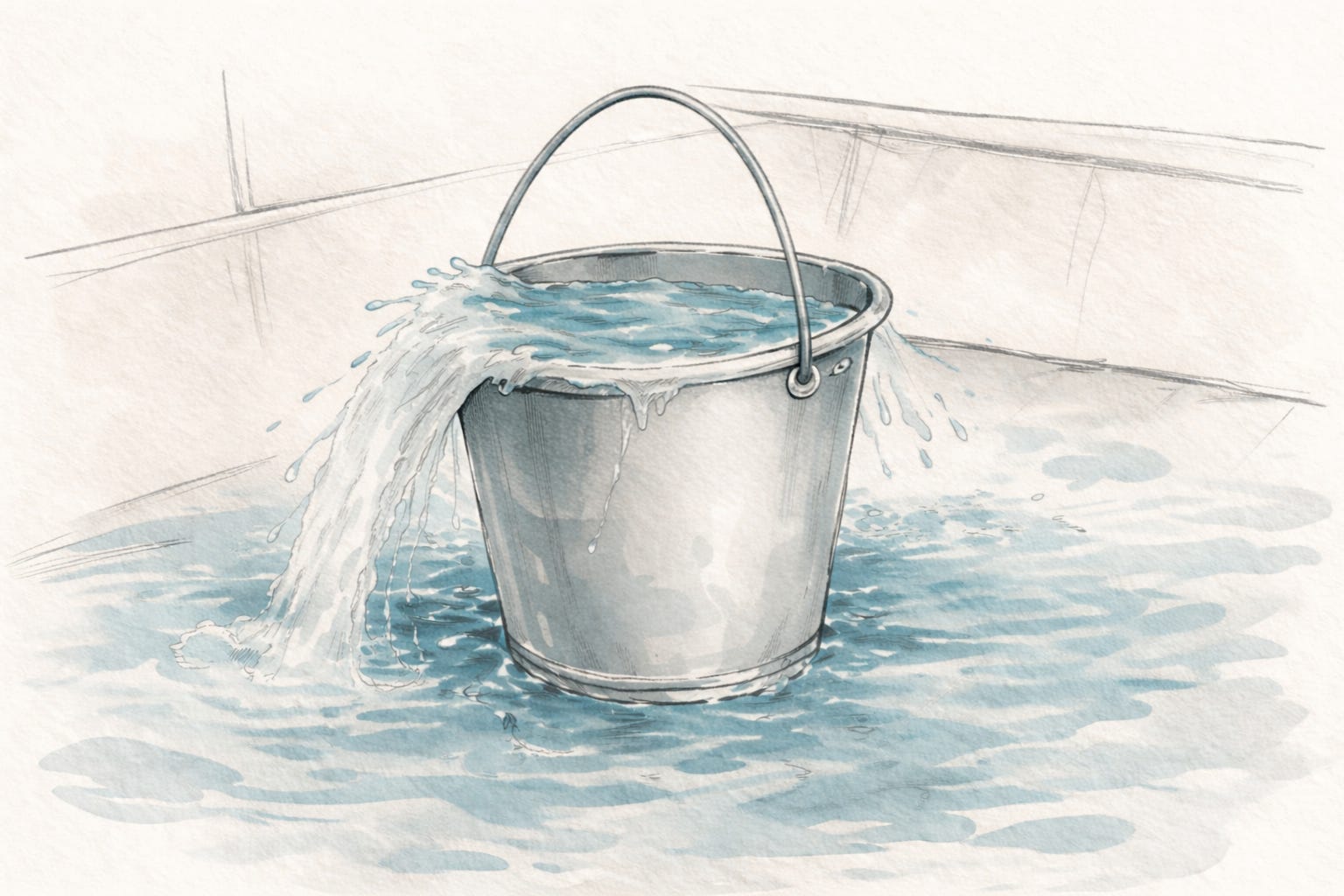
That is the bucket moment. The moment it feels done, and you keep bailing anyway.
A leadership question
Have you recognized and applauded the bucket carriers on your team? The people who do not flinch at the first sign of trouble, who back you up, and who keep working the plan.
And personally, when have you lived in the bucket mentality, and when have you slipped into lifejacket mode too soon?
If you are honest, where have you given up early, pulled the plug, and walked away without exhausting every option?
Some of my greatest wins have come only after looking in the mirror and thinking, This is hopeless. But I picked up a bucket.
Buckets, not lifejackets. That is how battles, and projects, are won.
About the Author
Josh Wood is a husband, dad of four, and a founder of All the Good Consulting. He is passionate about servant leadership, equipping teams, and helping nonprofits and mission-driven organizations grow with clarity, strategy, and sustainable impact.

Learn More About All the Good
All the Good partners with mission driven teams to bring clarity, strategy, and practical support to their work. We design resources to help leaders grow, build healthier teams, and lead with purpose. To learn more about what we do, visit our website, explore our Substack, or connect with us on social.